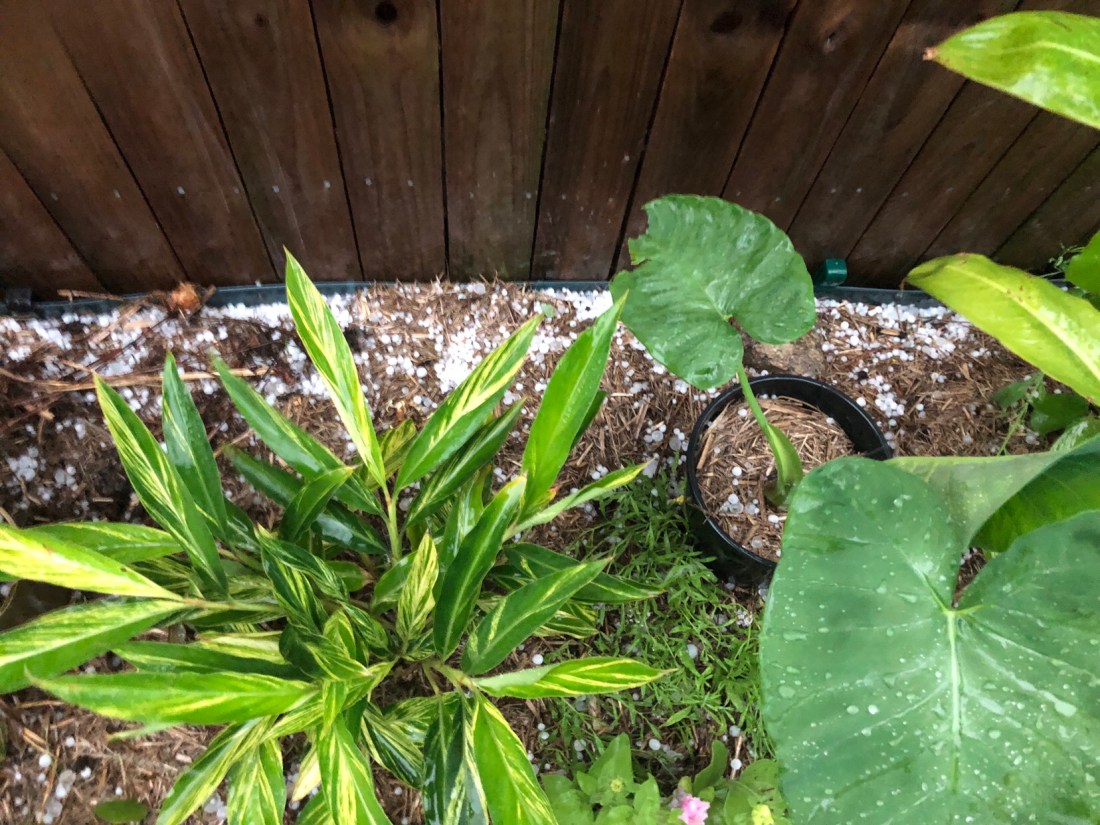
Image: damaging large hailstones and supercells are a common occurrence in South East Queensland.
When my partner and I first moved to Brisbane, it didn’t take me long to realise that gardening in the subtropics is not like gardening in any other climate.
I was delighted when I realised I could grow a tropical-style garden on our newly-purchased block, with exotic plants I have only ever read about or seen on holidays. The thought of growing pineapples, bananas, and pawpaws was a dream that those of us from from colder climes could only fantasize about in the dreary, cold and wet winters, and scorching dry summers of the south.
I started planting my garden around March-April this year, without really knowing what I was doing. I first planted a pawpaw and a banana in heavy, clay cleanfil, improved by digging in a couple of bags of cow and poultry manure. I was sure that whatever I could whack in the ground would grow; it is the subtropics after all.
And everything did grow. Very quickly, in fact.
Then came the subtropical winter. I started noticing black spots on the leaves of my pawpaw. My banana, likewise, had some kind of black spot disease. Our basil plants, which were growing swimmingly a month earlier, were covered in mould and dying.
The cool winter days in Brisbane are characterised by cold down to 5 degrees celsius overnight, with heavy morning dew. The cool temperatures cause stress for many warm-climate plants, and the heavy dew settling on leaves and high overall humidity create the perfect conditions for fungal spores to attack already vulnerable plants.
Which led me to my first realisation about gardening in the subtropics: plants grow vigorously in this climate, but are much more likely to be attacked by disease.
My second revelation came from planting seedlings of vegetables and herbs directly in the ground – which would never have been a problem in any of my previous homes in Sydney, Canberra, or Melbourne during winter. The subtropical sun is relentless and can burn young plants, even in winter. So all young plants need some kind of protection.
The third revelation about the challenges of gardening in the subtropics came around early September this year, when the (in)famous ‘Ekka winds’ wreaked havoc on our garden (named after the ‘Ekka’ AKA Royal Queensland Show, which more or less coincides with the appearance of the winds). These winds are westerly gales caused by high pressure systems off the coast of South Australia. They are deadly and desiccating for new plants (and even established trees). They snap branches, defoliate plants, and suck moisture out of the soil.
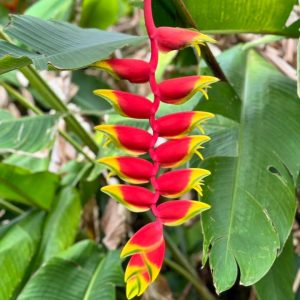
I didn’t lose any plants to the ‘Ekka winds’, but it caused a fair bit of damage to my larger leaved plants, such as heliconias and bananas. I think we were spared from any further carnage by the fact that we had mulched the garden heavily a few weeks before and kept the water up to all the plants in early September.
By about August and October this year (i.e. right now), the subtropical wet season has swung into action, and the days are hot and humid, with the occasional dumping of monsoonal rain and, every now and then, a super cell carrying destructively large hailstones. So far, these super-cells have caused minimal damage in our garden and our plants have been soaking up all the extra water from the rain which has made many of our plants very happy indeed.
I hope to post on this blog about my experiences in the garden from here on. I am not unfamiliar with gardening in the southern states, but I am completely unfamiliar with gardening in the subtropics. For me, this climate throws up many challenges, opportunities, and surprises which I hope to share with you in the following posts of this blog.
So please enjoy, and happy gardening!

 Zacaconia Tropical Gardens