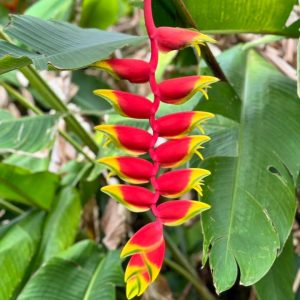
Palms form the backbone of tropical gardens. ‘What is a tropical garden without palms?’, one might argue. And yet they are often derided in some circles as being nuisances, rather than useful, beautiful, and productive garden plants. I have carefully selected palms for our garden, based on compact size, aesthetic appeal, and uses in the landscape. I now have a collection which is manageable on a busy schedule and it’s a collection I’m very satisfied with. So I thought I would put a list together of the palms we are growing on our suburban Brisbane block in 2025.

Without further ado, here is the list in alphabetical order (with links to Palmpedia if you’re looking for more information on each):
Adonidia merrillii – Christmas Palm
One of the absolute best landscaping palms for Brisbane gardens, is marginal in Brisbane, SEQ and Northern NSW and is best planted as an advanced specimen. Apart from the sensitivity to cold, it is a compact, adaptable palm that can grow in a range of conditions and tolerates full sun or shade.
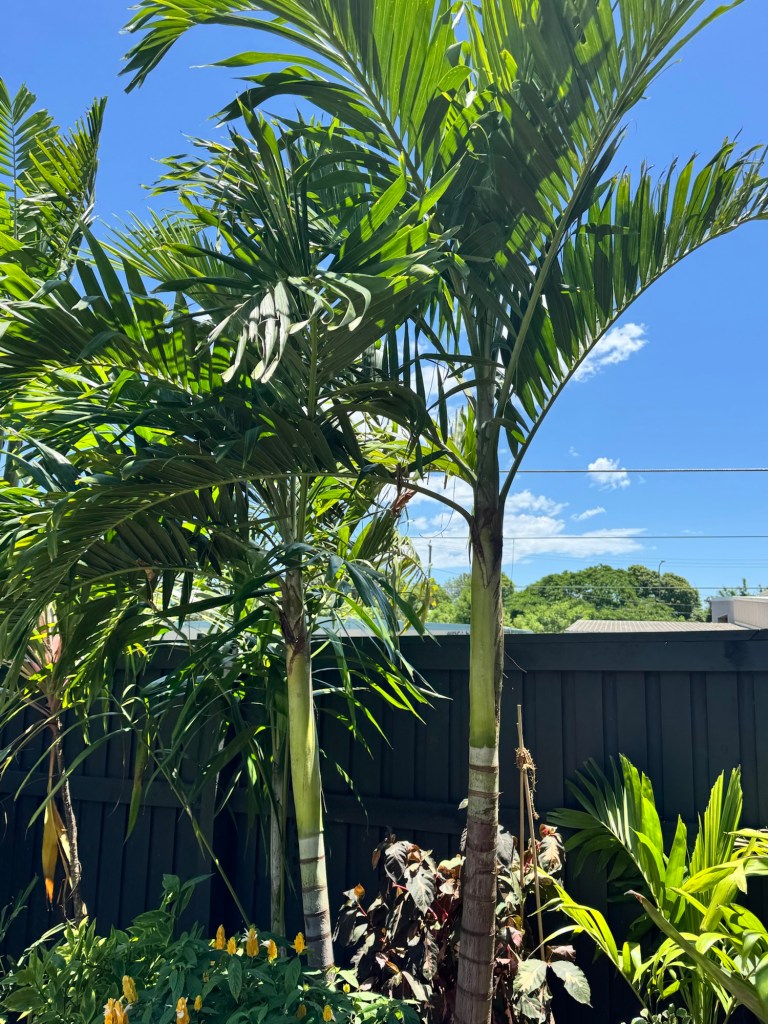
Areca triandra – Triandra Palm (or Areca Palm)
A very slow growing, small, clumping palm which enjoys shade.
Chamaedorea brachypoda – No common name
This is a palm that shoots from runners, it has largely been forgotten about in my garden and has survived on neglect. Not very commonly grown, but very attractive. Not very tall, its main use is as an understory shade plant.
Chamaedorea cataractarum – Cascade Palm
Another commonly sold indoor palm, makes a great smaller outdoor shade specimen in Brisbane.
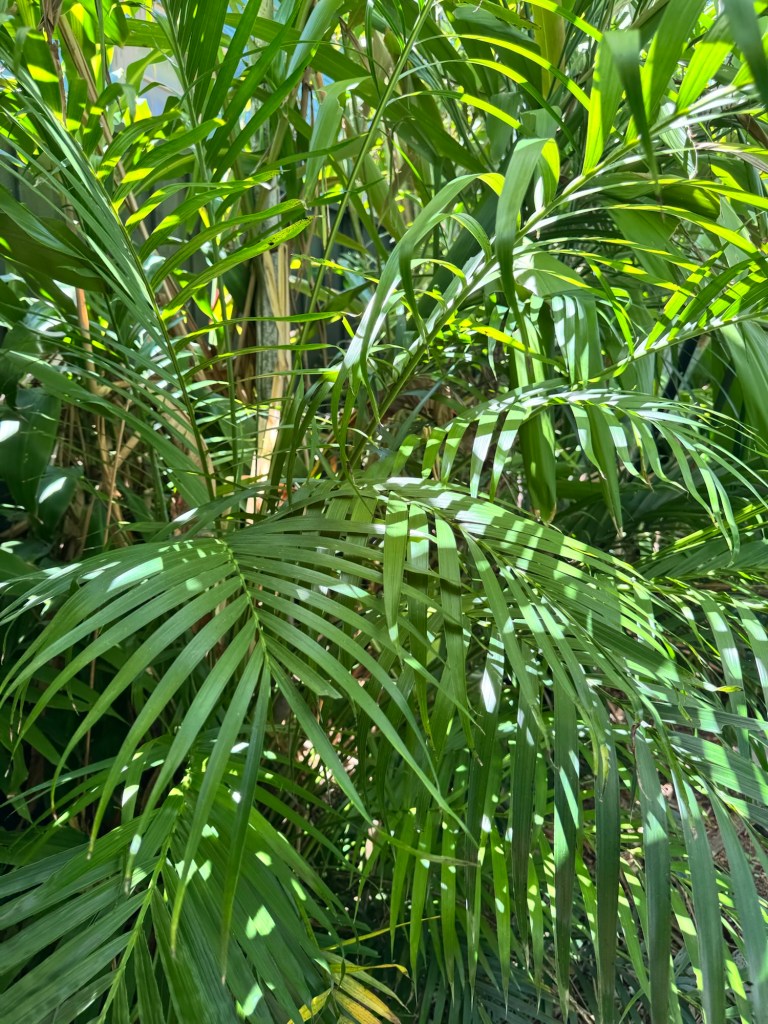
Chamaedorea elegans – Parlour Palm
A very commonly sold indoor plant in Australia.
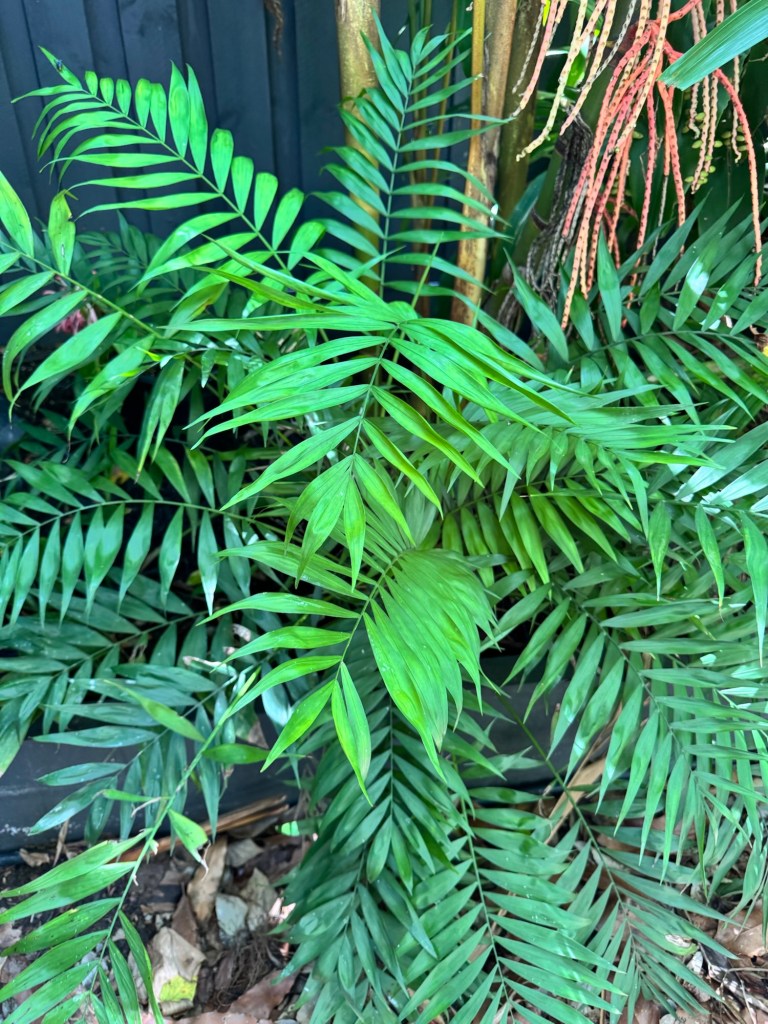
Chamaedorea seifrizii – Bamboo Palm (Florida Form)
A very commonly sold palm in nurseries, we are growing the Florida form which is reputed to be more tolerant to full sun, given enough water.
Cocos nucifera — Coconut Palm (Green Malay Dwarf variety)
Is a tropical garden truly complete without a coconut palm? (If your climate enables you to grow one!). I opted for the dwarf kind, as space constraints are an issue for me. Coconuts can be very large palms!
Dypsis cabadae – Blue Cane Palm
Another alternative – and close relative to – the Golden Cane Palm, but does not have as many issues with invasive roots.
Pinanga coronata – Ivory Cane Palm
A gorgeous clumping palm, with ivory coloured crown shafts. This is my absolute favourite palm in our entire garden.
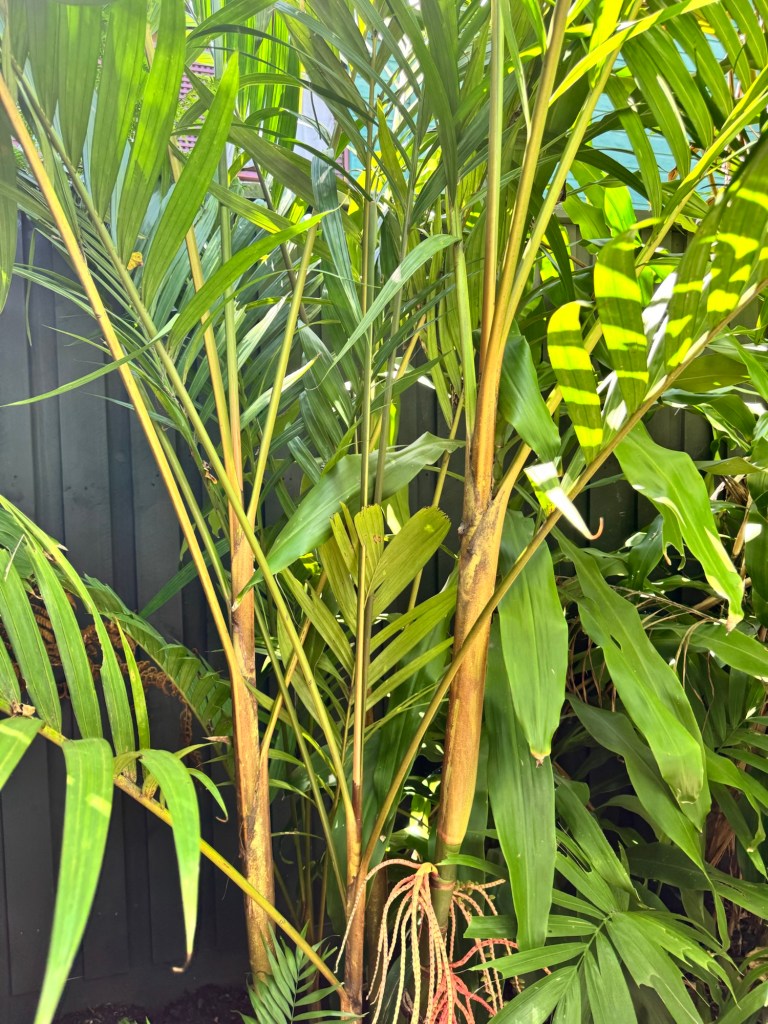
Ptychosperma elegans – Solitaire Palm
The names given to this palm are accurate: it is both solitary and elegant. I prefer this palm to many of the more common taller palms found around Brisbane, such as Bangalow and Alexander palms… it’s more compact, and easier to manage on a suburban block.
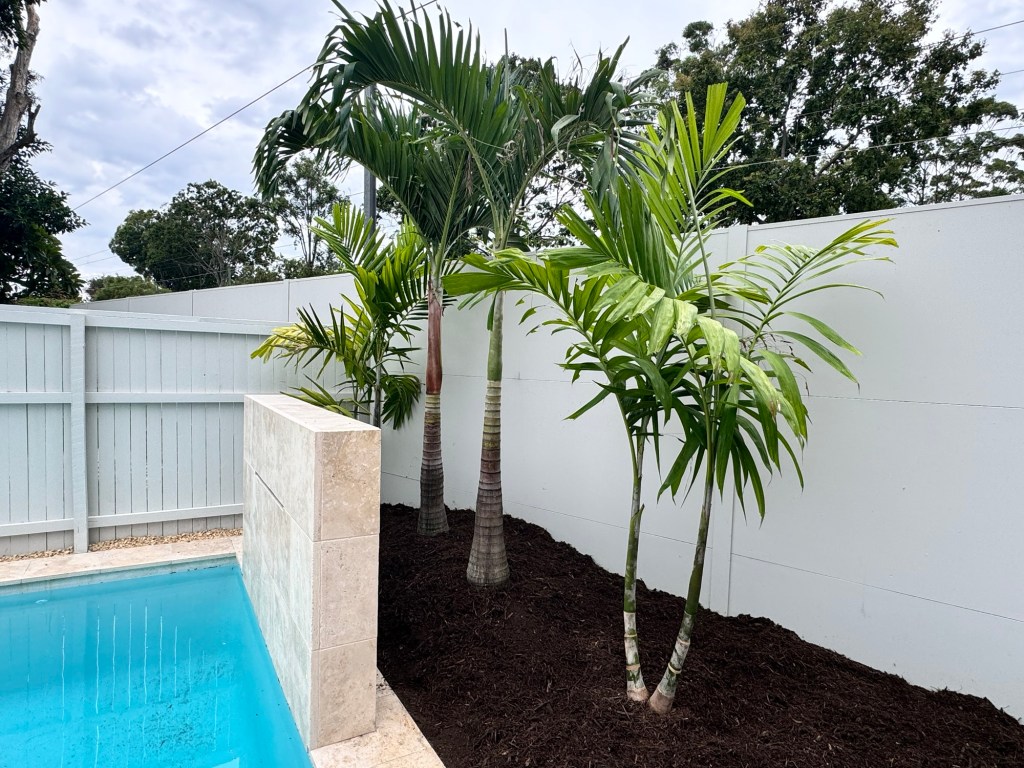
Ptychosperma macarthurii – Macarthur Palm
One of my favourite landscaping palms, a clumping palm native to the northern parts of Australia in Far North Queensland and parts of the Northern Territory. They make a great screening palm, and are a good alternative to Golden Cane Palms where the root competition with other plants and structures may be an issue.
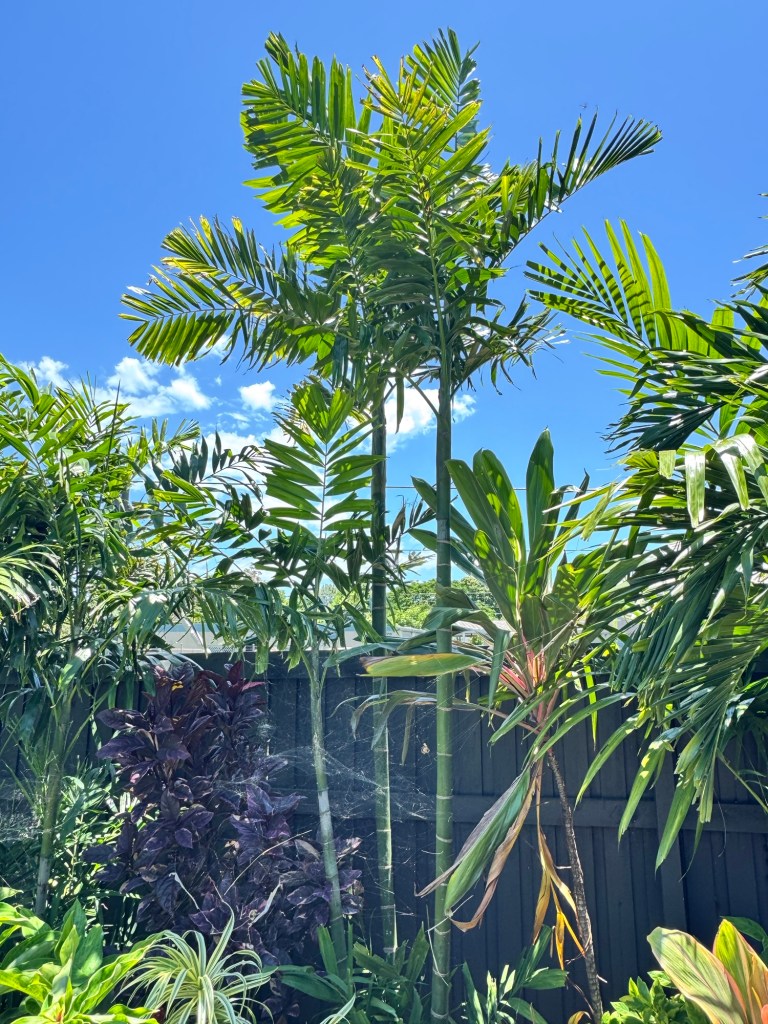
Ptychosperma schefferi – No common name
We have several of these that were sold to us as ‘MacArthur Palms’ by a reputable nursery in Brisbane. Indeed, they are similar in appearance with many of the same characteristics of Ptychosperma macarthurii, but the leaves have more of a graceful gentle arching, slightly weeping habit.
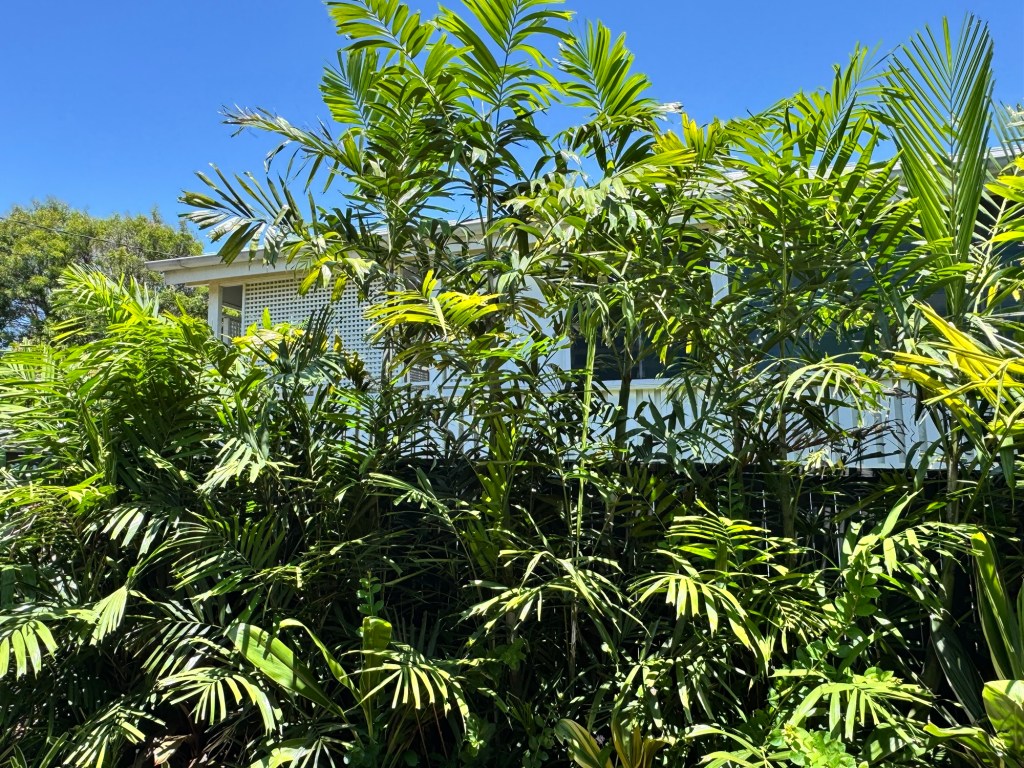
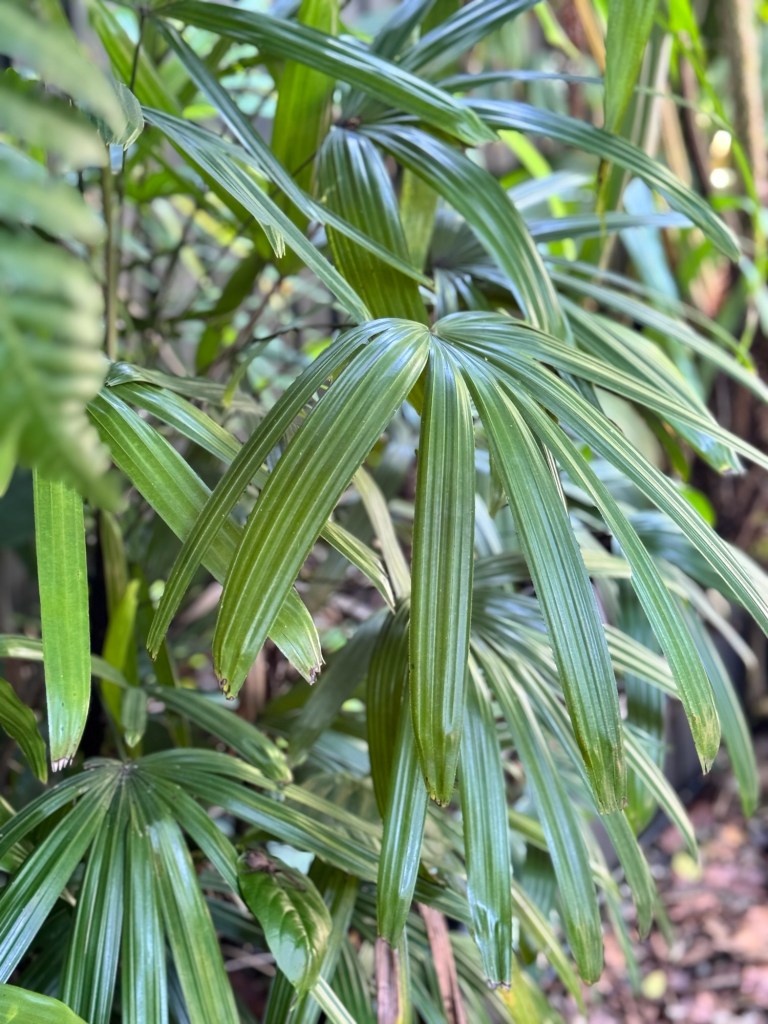
Rhapis excelsa – Rhapis Palm (also known as Lady Palm)
Another very common palm, that needs no introduction!
Bonus!
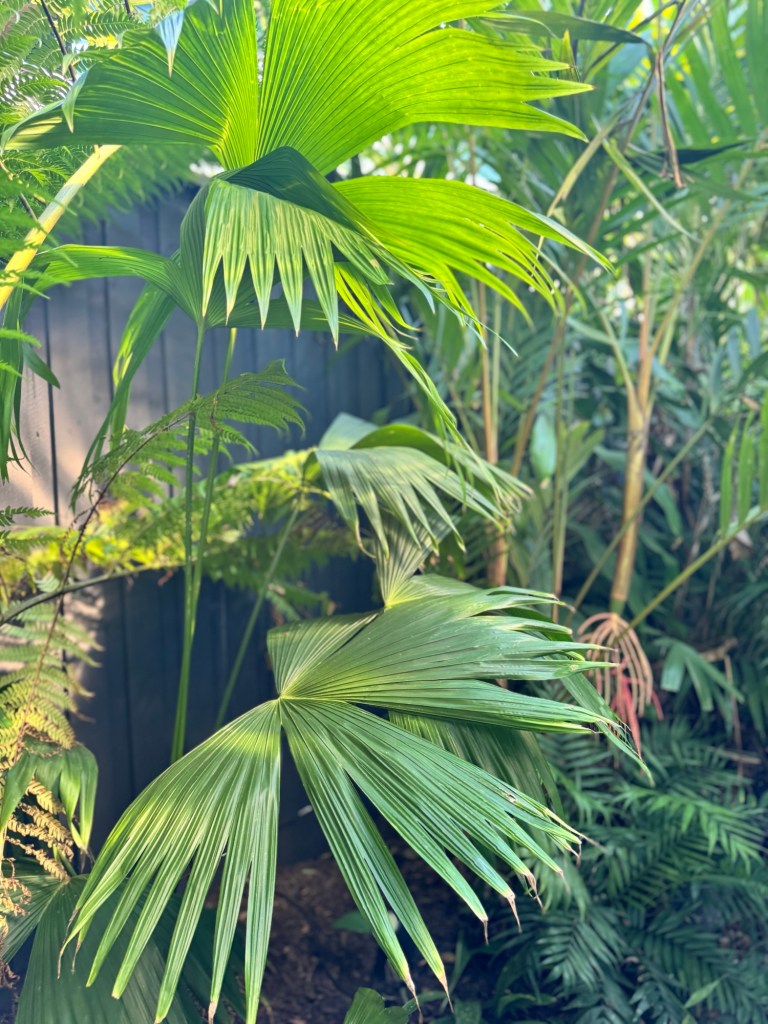
Carludovica palmata – Panama Hat Palm
The Panama Hat Palm (I now prefer to call it ‘Panama Hat Plant’), is not a palm at all but a relative of Cyclanthus. Botanically, it’s more closely related to Pandanus, than it is related to palms. A beautiful plant, which is a little bit hard to come by in South East Queensland.

 Zacaconia Tropical Gardens